
Uttar Pradesh has emerged as India’s leading state in domestic tourism in 2025, attracting over 650 million domestic visitors, the highest in the country. A key catalyst behind this surge has been the development of the “Spiritual Triangle” of Ayodhya–Varanasi–Prayagraj, which has led to a phenomenal over 361% growth in domestic tourist footfall in recent years.
Fairs and Festivals of Uttar Pradesh
Uttar Pradesh, located in northern India, is renowned for its ancient traditions, spiritual heritage and composite culture. One of the most vibrant expressions of this heritage is seen in its numerous fairs and festivals held throughout the year. These events reflect the religious devotion, folk traditions, historical legacy and cultural diversity of the state. From world-famous religious congregations like the Kumbh Mela to regional folk and cultural festivals such as Nauchandi Mela, Bateshwar Fair and Kajali Mahotsav, fairs and festivals play a vital role in preserving traditions, strengthening social harmony and promoting tourism.
| Name of Fair / Festival | Region / Place of Celebration |
|---|---|
| Kumbh Mela | Prayagraj |
| Bateshwar Mela | Bateshwar (Agra) |
| Garhmukteshwar Mela | Hapur |
| Nauchandi Mela | Meerut |
| Deva Mela | Barabanki |
| Lucknow Mahotsav | Lucknow |
| Ganga Mahotsav | Varanasi |
| Dev Deepawali | Varanasi |
| Ramayan Mela | Chitrakoot |
| Ram Navami Mela | Ayodhya |
| Diwali (Deepotsav) | Ayodhya |
| Buddha Purnima | Sarnath, Kushinagar |
| Janmashtami | Mathura |
| Ganga Dussehra | Varanasi, Prayagraj |
| Barsana & Braj Holi | Barsana, Mathura, Braj region |
| Navratri | Across UP (notably Varanasi) |
| Durga Puja | Varanasi, Lucknow, Kanpur |
| Eid-ul-Fitr | Lucknow and major cities |
| Eid-ul-Adha | Across Uttar Pradesh |
Famous Fairs of Uttar Pradesh
- Kumbh Mela (Prayagraj): It is the largest religious gathering in the world, held once every 12 years at the confluence of the Ganga, Yamuna and mythical Saraswati rivers. Millions of pilgrims participate in ritual bathing, religious discourses and cultural activities, making it a global symbol of India’s spiritual heritage.
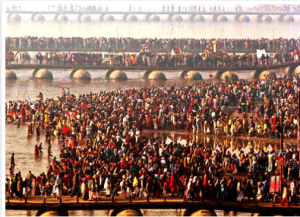
Source State Portal UP Government
- Bateshwar Mela (Agra): Held annually in November, it is primarily a cattle fair along the Yamuna riverbanks, combined with religious rituals, folk performances and rural commerce, reflecting agrarian culture.
- Garhmukteshwar Mela (Hapur): Organised during Kartik month, it is dedicated to Lord Shiva and held on the banks of the Ganga. The fair blends pilgrimage with cultural programmes and local trade.
- Nauchandi Mela (Meerut): Dating back to Mughal times, this fair symbolizes cultural exchange and communal harmony, featuring crafts, food stalls and folk entertainment.
- Deva Mela (Barabanki): Associated with a Shiva temple, it is famous for processions, cultural performances and fireworks, drawing devotees from nearby regions.
- Lucknow Mahotsav: A major cultural festival highlighting Awadhi cuisine, Kathak dance, ghazals, crafts and traditions, contributing significantly to urban cultural tourism.
- Ganga Mahotsav and Dev Deepawali (Varanasi): Celebrated on the banks of the Ganga, these festivals combine spiritual rituals with music, dance and illumination, enhancing Varanasi’s global spiritual appeal.
- Ramayan Mela and Ram Navami Mela: Held in Chitrakoot and Ayodhya, these fairs celebrate the Ramayana tradition, strengthening the Ramayana Circuit tourism.
| Read more about Uttar Pradesh Festivals |
Famous Festivals of Uttar Pradesh
- Diwali (Deepotsav of Ayodhya): Celebrated with grandeur across UP, Diwali signifies the victory of light over darkness and good over evil.
Ayodhya’s Deepotsav, with thousands of lamps, has emerged as a major spiritual tourism attraction. - Buddha Purnima: Observed at Sarnath and Kushinagar, it marks the birth, enlightenment and Mahaparinirvana of Lord Buddha.
The festival reflects UP’s importance in Buddhist heritage and international pilgrimage. - Janmashtami: Celebrated with great fervour in Mathura, the birthplace of Lord Krishna.
Rituals, processions and the Dahi Handi ceremony highlight Krishna’s life and folklore. - Ganga Dussehra: Dedicated to the worship of River Ganga and celebrated mainly in Varanasi and Prayagraj.
Devotees take ritual baths seeking purification and spiritual merit. - Barsana and Braj Holi: Famous for Lathmar Holi, these celebrations are linked to Krishna-Radha traditions.
Folk music, dance and colour-filled rituals attract tourists from across India. - Navratri and Durga Puja: Navratri is celebrated with devotion across UP, especially in Varanasi.
Durga Puja features decorated pandals, cultural events and idol immersion ceremonies. - Eid-ul-Fitr and Eid-ul-Adha: These festivals reflect Uttar Pradesh’s composite culture and communal harmony.
Celebrated with prayers, feasting and charity, especially in cities like Lucknow.
Significance of Fairs and Festivals in Uttar Pradesh
-
Cultural Preservation: Fairs and festivals act as living repositories of heritage by safeguarding folk arts, traditional rituals, indigenous crafts, music, dance and oral traditions, ensuring their transmission to future generations.
-
Social Integration: These gatherings bring together people across caste, creed, religion and region, fostering social harmony, mutual respect and a shared cultural identity in a diverse society.
-
Economic Impact: Festivals generate substantial seasonal and informal employment by supporting artisans, folk performers, local traders, transporters and small hospitality businesses.
-
Tourism Promotion: By attracting millions of pilgrims and tourists, fairs and festivals strengthen religious, cultural and heritage tourism, contributing significantly to the state’s economy.
-
Soft Power and Global Outreach: Iconic events like Kumbh Mela and Deepotsav enhance India’s cultural soft power, projecting Uttar Pradesh as a global centre of spirituality and cultural richness.
Government Initiatives Related to Fairs and Festivals
- Tourism Circuits Development: Promotion of themed circuits such as Ramayana Circuit, Krishna–Braj Circuit, Buddhist Circuit, Sufi–Kabir Circuit and Bundelkhand Circuit to integrate fairs and festivals with spiritual and cultural tourism.
- Infrastructure Upgradation: Development of roads, ghats, sanitation facilities, lighting, drinking water and accommodation at major fair and festival locations to handle large footfalls.
- Event-based Tourism Promotion: Branding and global promotion of flagship events like Kumbh Mela, Deepotsav of Ayodhya and Ganga Mahotsav through national and international tourism platforms.
- Artisan and Cultural Support: Support for local artisans, folk artists, handicraft clusters and self-help groups by providing exhibition spaces and market access during fairs.
- Digital and Safety Measures: Use of crowd-management technologies, CCTV surveillance, drone monitoring, e-information kiosks and mobile apps for safety and convenience of visitors.
- Public-Private Partnership (PPP): Involvement of private players in event management, hospitality services and infrastructure creation to improve service quality.
- Eco-friendly Initiatives: Promotion of green fairs through waste management, plastic-free zones and river conservation measures, especially during mega events.
- Skill Development & Employment: Training local youth in hospitality, tour guiding, event management and cultural entrepreneurship, generating seasonal employment.
- Marketing & Outreach: Use of social media, digital campaigns and cultural festivals abroad to attract domestic and foreign tourists.
Challenges in Organising Fairs and Festivals in Uttar Pradesh
- Overcrowding and Safety Risks: Mega events like the Kumbh Mela attract millions of pilgrims, posing challenges related to crowd management, stampede prevention, health emergencies and disaster preparedness.
- Inadequate Infrastructure: Many fairs held in rural and remote areas suffer from poor connectivity, limited accommodation, insufficient sanitation and lack of basic civic amenities.
- Environmental Stress: Large gatherings lead to waste accumulation, plastic pollution and pressure on rivers and local ecosystems, especially during river-based festivals.
- Commercialisation of Culture: Excessive focus on tourism and revenue generation sometimes dilutes the authenticity of traditional rituals, folk arts and spiritual practices.
- Uneven Promotion and Development: While flagship events receive extensive support and visibility, lesser-known regional fairs often remain under-promoted and under-funded, limiting their growth potential.
Way Forward
-
Sustainable Festival Management: Eco-friendly practices, waste management and river conservation.
-
Balanced Promotion: Develop lesser-known regional fairs through circuit-based tourism.
-
Community Participation: Involve local residents, artisans and youth in planning and management.
-
Digital Integration: Online schedules, virtual tours, e-ticketing and information portals.
-
Skill Development: Training in hospitality, event management and cultural entrepreneurship.
Conclusion
Fairs and festivals in Uttar Pradesh are not just cultural expressions, they are pillars of socio-economic growth. By strategically linking festivals with tourism circuits, infrastructure development, and global marketing, UP is transforming cultural celebrations into engines of sustainable development. With better planning and preservation strategies, these festivals will continue to preserve heritage while creating inclusive growth opportunities.