
Discuss the steps required to realise ‘hydro-co- operation’ between India and Bangladesh
How the answer moves
The flow snapshot — the routes in, the body, the counter-view and the routes out.
Route 1 54 rivers, only two under agreement → JRC idle since 2011 → water shared river by river, as volume → steps must move it to basin management
Route 2 what has failed is the frame, not the goodwill → each river negotiated separately, each deal a division of quantity → co-operation begins when the unit shifts from river to basin
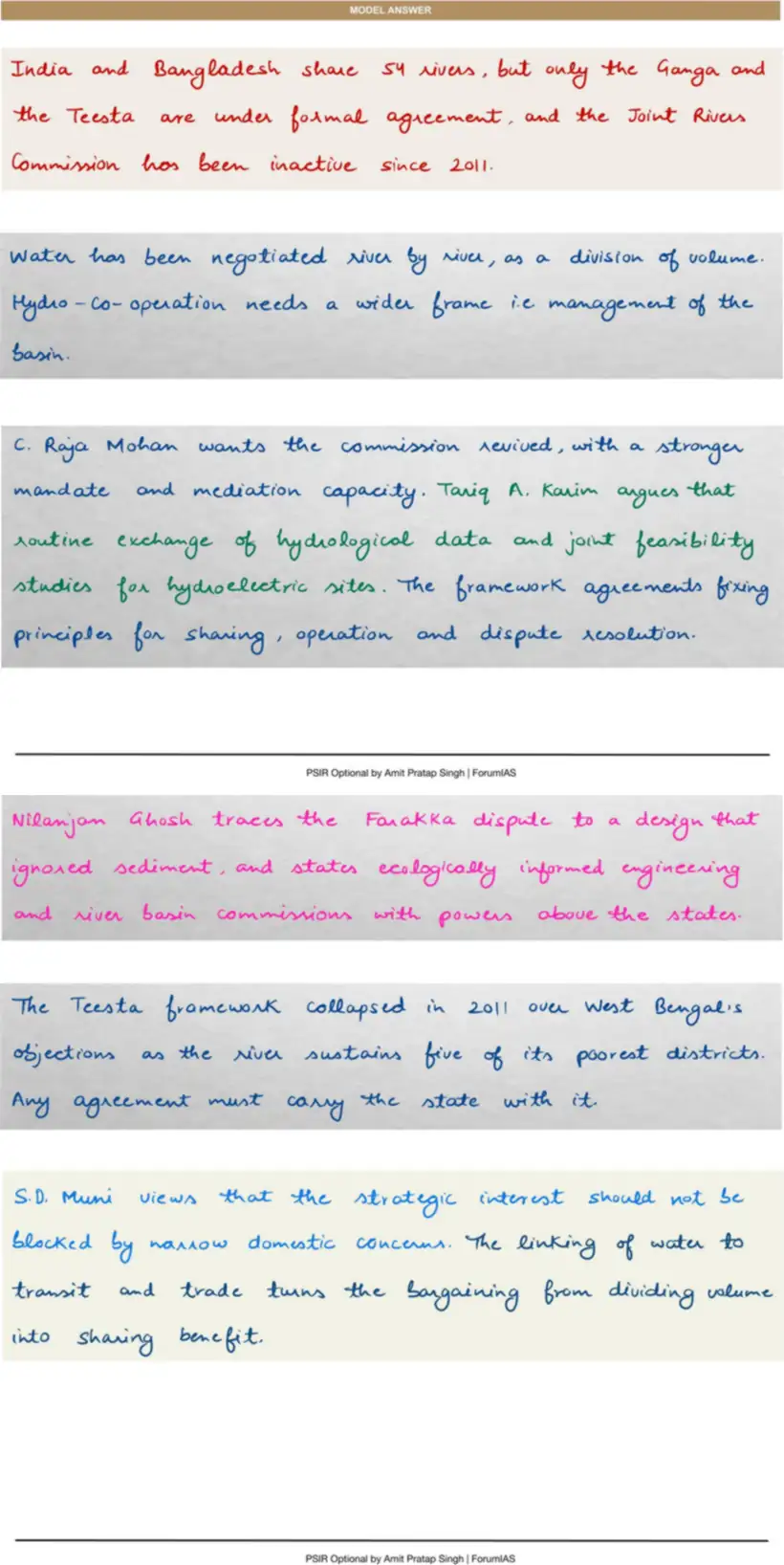
institutional first: JRC revived, stronger mandate, mediation capacity (Raja Mohan) → procedural content: hydrological data exchange, joint feasibility studies for hydro sites, framework agreements on sharing / operation / disputes (Karim) → engineering reform: Farakka’s design ignored sediment → ecologically informed engineering + basin commissions with powers above the states (Nilanjan Ghosh)
commissions above the states collide with federal politics → Teesta framework fell in 2011 to West Bengal’s objections → five of its poorest districts live off the river → consent has to be carried, not overridden
Route 1 Muni: strategic interest not to be blocked by narrow domestic concerns → water linked to transit and trade → dividing volume becomes sharing benefit
Route 2 sequence the steps: data and institutions first, allocation last → a wider benefit is what makes the state’s consent affordable
Model answer
Handwritten, in the form it would be written in the examination hall.
Also asked on this head
India and South Asia — 32 questions in the Vault.
- The island of Kachchatheevu remains an intractable issue in India-Srilanka relations. Comment.
- How does illegal cross border migration pose challenges to India’s security? Discuss the steps taken by the government in this direction and their effectiveness.
- Critically evaluate the important factors of India-Maldives relations on the eve of sixty years of diplomatic ties between the two countries.
How this is taught
The same flow snapshot, built for every head of the syllabus, with the answer written in class.
The first session of Foundation 2027 is published in full.
Six programmes across three levels.