
Discuss the strategic implications of India’s ‘Look East Policy’ transforming into ‘Act East Policy’.
How the answer moves
The flow snapshot — the routes in, the body, the counter-view and the routes out.
Route 1 1991 turn east forced by the Soviet collapse → 2014 renaming changed instruments, not direction → implications cut both ways
Route 2 Look East sought markets, Act East seeks position → the verb changed when the theatre widened from Southeast Asia to the Indo-Pacific → so the policy is now judged on delivery
eastern policy becomes Indo-Pacific policy → Bay of Bengal as shared security space → BIMSTEC past SAARC’s paralysis, Pakistan marginalised → Sittwe against Chinese ports → but acting needs ground India does not control → Raja Mohan on slow implementation, weak connectivity → Kaladan + trilateral highway stalled, June 2026 → corridors cross an unsettled Northeast
the reorientation itself is real, not rhetoric → what is contested is conversion: trade review open since 2023, and the 2026 regional survey puts distrust above trust in the four maritime states India courts most → reach outrunning delivery
Route 1 frame widened, delivery has yet to catch up
Route 2 the verb changed before the capacity did — Act East reads India’s interests correctly and still awaits the means to serve them
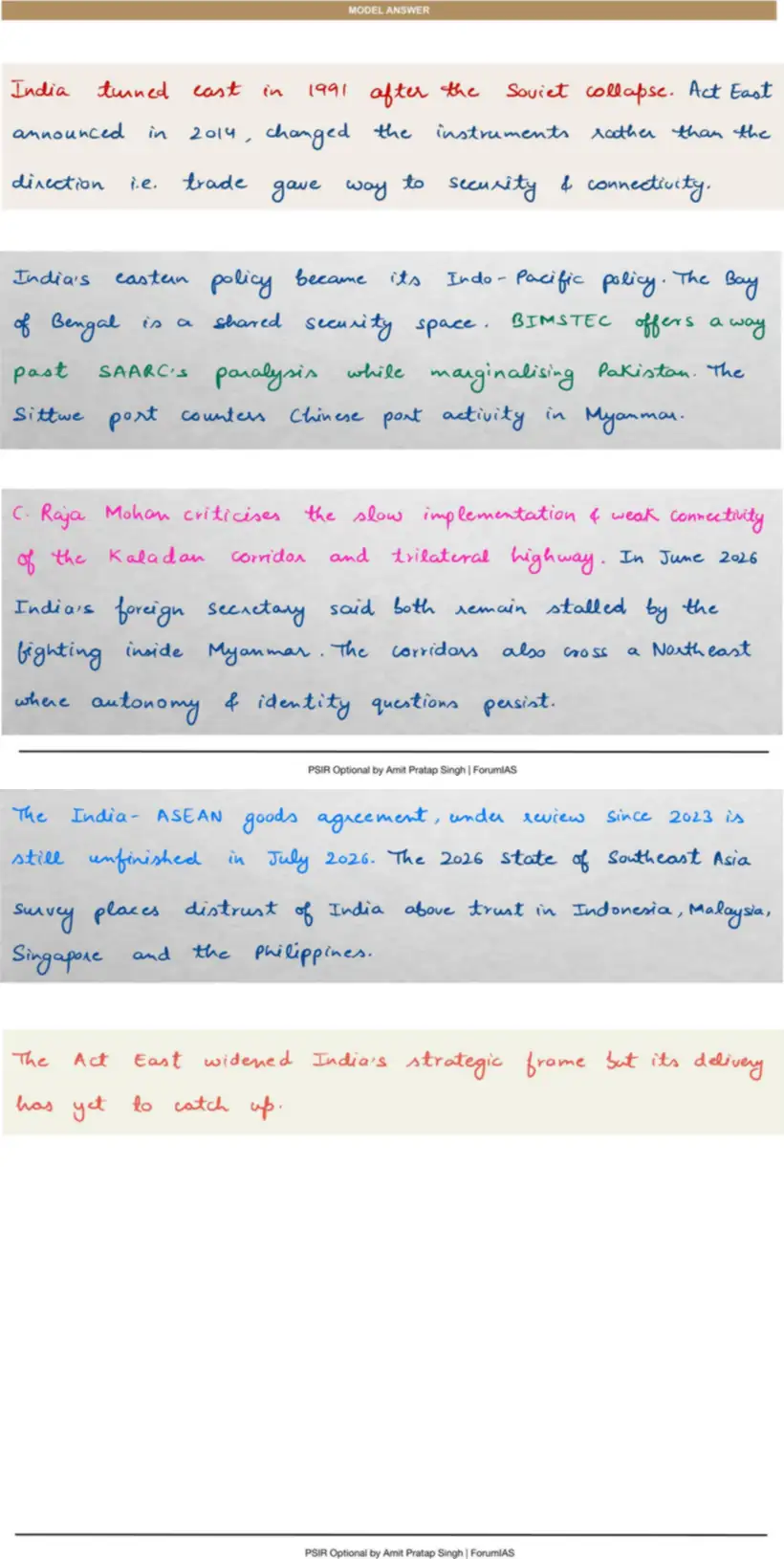
Model answer
Handwritten, in the form it would be written in the examination hall.
Also asked on this head
India and South Asia — 32 questions in the Vault.
- The island of Kachchatheevu remains an intractable issue in India-Srilanka relations. Comment.
- How does illegal cross border migration pose challenges to India’s security? Discuss the steps taken by the government in this direction and their effectiveness.
- Critically evaluate the important factors of India-Maldives relations on the eve of sixty years of diplomatic ties between the two countries.
How this is taught
The same flow snapshot, built for every head of the syllabus, with the answer written in class.
The first session of Foundation 2027 is published in full.
Six programmes across three levels.