
The recent move of USA to withdraw from the Paris
How the answer moves
The flow snapshot — the routes in, the body, the counter-view and the routes out.
Route 1 Paris (2015) = rare voluntary consensus, bottom-up NDCs, <2°C → US exit a real setback (rests on collective commitment, not enforcement)
Route 2 US withdrawal (Trump 2017 → finalised 2020) = retreat from multilateralism → tests whether a consensus regime survives one major emitter leaving
Falkner: exit weakens the collective commitment the accord depends on → Ban Ki-moon: US as 2nd-largest polluter burdens the carbon budget + makes finance harder → domino effect: developing states may relax pledges (decarbonisation cost + energy security) → onus shifts to EU / China / India (none experienced in a multilateral regime) + unclear Katowice Rulebook → dilution risk → IPCC: 1.5°C budget gone by 2030 even if Paris followed → bottom-up design absorbs the exit, US rejoins under Biden → Stern: link climate action to development for equity
one emitter’s exit can unravel a voluntary consensus (contagion, diluted finance) vs a bottom-up architecture is resilient — survives exits and re-entries, held together by remaining emitters, finance and equity
Route 1 prospects turn on sustained finance + CBDR + leadership of the remaining emitters, not any single state
Route 2 setback real but not permanent → future secured by integrating climate with equitable development, not the presence of the US
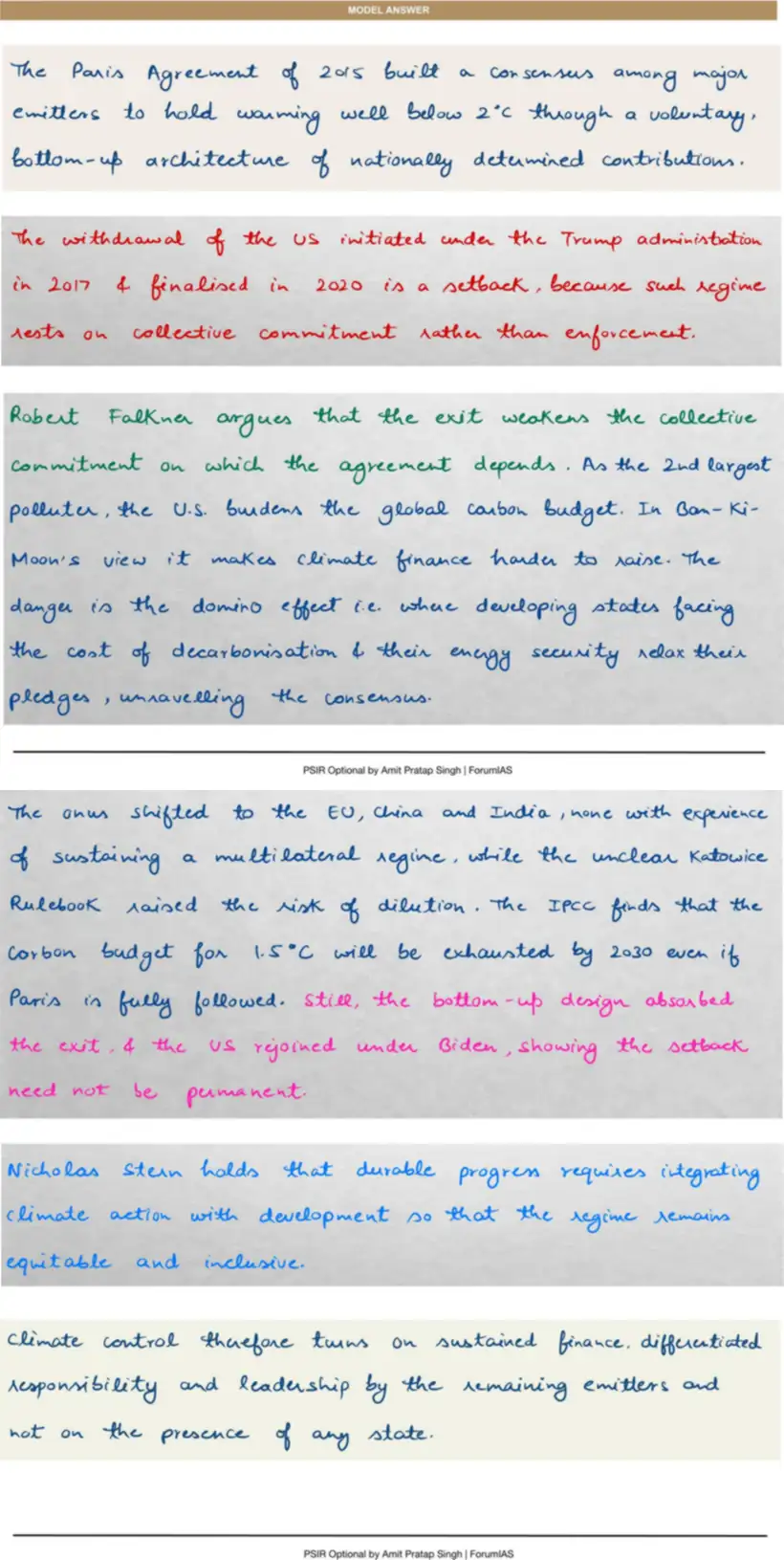
Model answer
Handwritten, in the form it would be written in the examination hall.
Also asked on this head
Contemporary Global Concerns — 22 questions in the Vault.
- International Human Rights frameworks are hostage to politics among nations. Comment.
- How does the regime change and political crisis in Myanmar threaten regional security and peace?
- Discuss the five proposals made by India in the recent COP-26 conference held in Glasgow. (150 words)
How this is taught
The same flow snapshot, built for every head of the syllabus, with the answer written in class.
The first session of Foundation 2027 is published in full.
Six programmes across three levels.