
Global South-sensitive model of globalization would prevent the danger emanating from overcentralized clobalization. Discuss.
How the answer moves
The flow snapshot — the routes in, the body, the counter-view and the routes out.
Route 1 claim rests on a real diagnosis → over-centralisation = rule-making + gains locked in a Northern core
Route 2 danger is genuine, but curable by reform, not by dismantling globalisation
danger is structural (Wallerstein → periphery-to-core drain → underdevelopment) → danger is institutional (IMF/WTO/UN favour the North → Stiglitz’s democratic deficit, the affected have least say) → South-sensitive model = decentralise rule-making + rebalance representation → South’s agenda: fairer multilateralism, SDG finance, climate justice (Loss and Damage) → voice of the South (Ukraine, Gaza, climate)
Nayyar → globalisation needs a hegemon → remove the coordinating core → fragmentation, not fairness → decentralisation without reformed leadership solves little
Route 1 reform, not replacement → build the South in → more equitable + resilient, less backlash
Route 2 qualified yes → the model reduces the danger only by reforming leadership, not by removing it
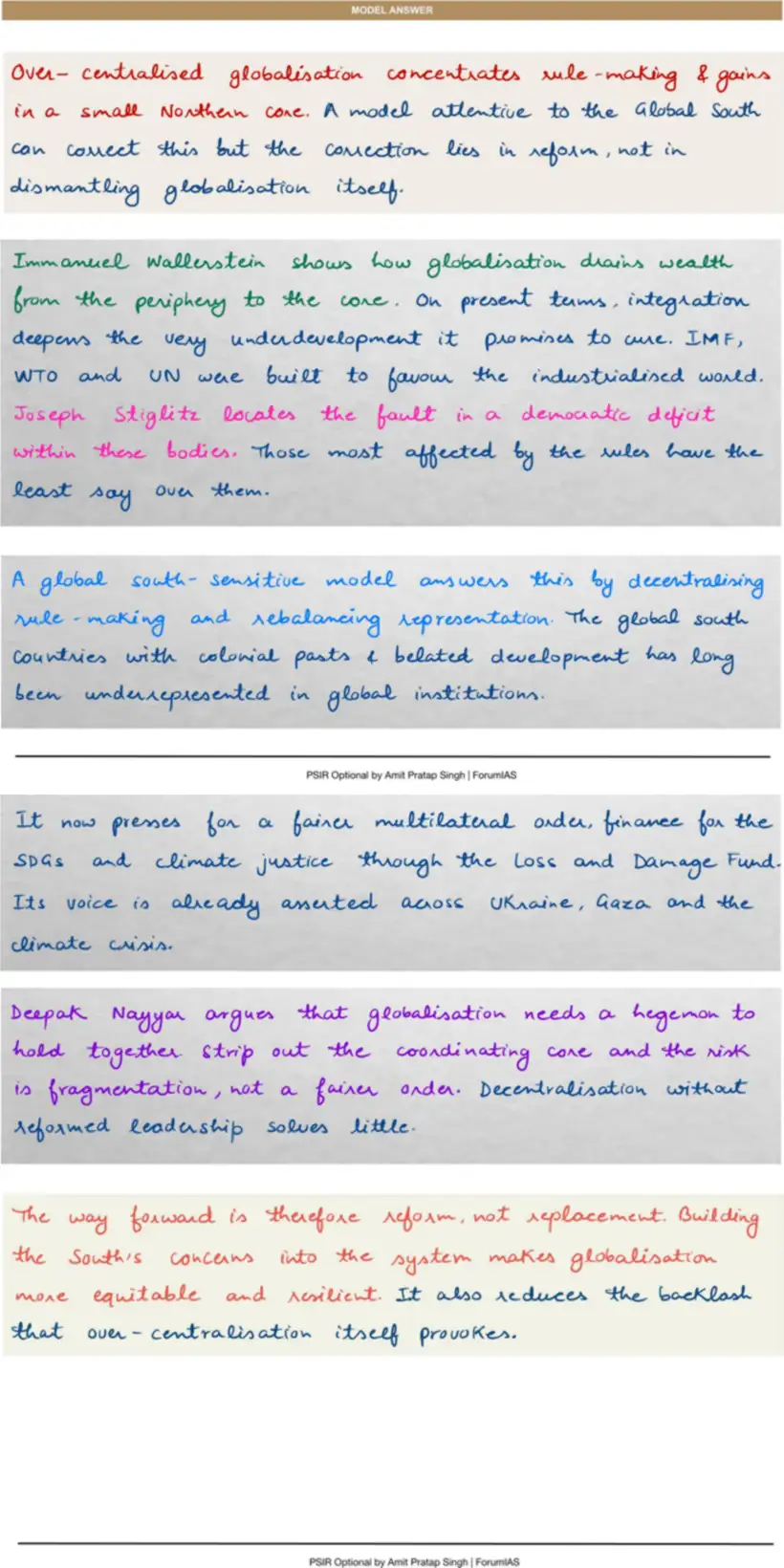
Model answer
Handwritten, in the form it would be written in the examination hall.
Also asked on this head
Globalisation — 10 questions in the Vault.
- “Deglobalisation is displacing globalisation.” Comment.
- Critically examine the impact of Globalisation on the developing countries of the world.
- What are the main challenges faced by the developing countries in the era of globalisation?
How this is taught
The same flow snapshot, built for every head of the syllabus, with the answer written in class.
The first session of Foundation 2027 is published in full.
Six programmes across three levels.