


ForumIAS LATEST
- Prelims Test Series (PTS) for Prelims 2027 starts 11th Oct. 2026 Click Here to know more →
- [Pre-order] Ethics Redbook 3rd Edition: Delivery starts from 10th October onwards Click Here to Read More →
- 21 Sept. | Forum Residential Coaching (FRC) for UPSC preparation Click Here to know more →
- 21 Sept. | GS Advance Program (GSAP) for UPSC 2027 Mains starts from 10th Oct. Click Here to Read More →
News: The 2020 Nobel Prize for Medicine or Physiology has been awarded to Americans Harvey J Alter and Charles M Rice and British scientist Michael Houghton for the discovery of the Hepatitis C virus.
Facts:
- Hepatitis C: It is a liver disease caused by the hepatitis C virus (HCV): the virus can cause both acute and chronic hepatitis, ranging in severity from a mild illness lasting a few weeks to a serious, lifelong illness.
- Spread: The hepatitis C virus is a bloodborne virus: the most common modes of infection are through exposure to small quantities of blood. This may happen through injection drug use, unsafe injection practices, unsafe health care, transfusion of unscreened blood and blood products, and sexual practices that lead to exposure to blood.
- Cases of Hepatitis C: According to WHO, about 71 million people (6 -11 million of them in India) have chronic infection with the Hepatitis C virus which also happens to be a major cause of liver cancer.
- How is Hepatitis C treated? Presently there is no vaccine available for HCV.However, it can be treated with antiviral medication.
Additional Facts
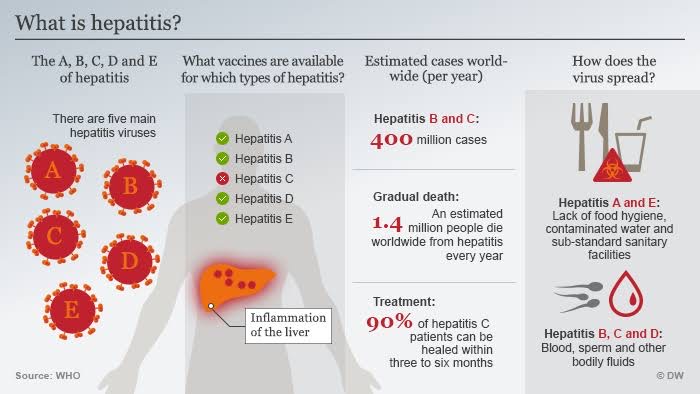
- Hepatitis: It is an inflammation of the liver.The condition can be self-limiting or can progress to fibrosis (scarring), cirrhosis or liver cancer.
- Types of Hepatitis: There are 5 main hepatitis viruses referred to as types A, B, C, D and E.
- Hepatitis A and E are typically caused by ingestion of contaminated food or water.
- Hepatitis B, C and D usually occur as a result of parenteral contact with infected body fluids such as contaminated blood or blood products, invasive blood procedures using contaminated equipment.
- Hepatitis B transmission can also happen from mother to baby at birth, from family member to child and also by sexual contact.



