


ForumIAS LATEST
- CSAT Classes for Prelims 2027 by Rishi Bhargav sir starts 2 Nov. at 5 PM Click Here to know more →
- Prelims Sprint classes for Prelims 2027 start 2 Nov. Click Here to know more →
News: Three Amur falcons tagged in Manipur were recently seen wintering in Africa. They have been tracked since November 2025 as part of a Manipur Amur Falcon Tracking Project by the Wildlife Institute of India (WII).
About Amur Falcon
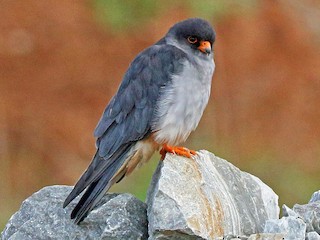
- It is a small migratory bird of prey belonging to the family Falconidae.
- It is known for its remarkable long-distance migration.
- Scientific name: Its scientific name is Falco amurensi.
- Named after: It is named after the Amur River, which runs through its breeding grounds in the Far East.
- Habitat: It is found in open forests, grasslands, wetlands and agricultural landscapes.
- Distribution: In India, it is primarily found during their migration in the northeastern states, especially in Nagaland, Manipur, and parts of Assam and Arunachal Pradesh.
- It is locally known as ‘Kahuaipuina.’
- Note: The Doyang Reservoir in Nagaland is particularly famous as a significant roosting site for tens of thousands of Amur Falcons during their annual migration.
- It breeds in southeastern Siberia, northern China, and Mongolia, and winters in southern Africa.
- Diet: Its diet primarily consists of insects, particularly locusts and termites, which they catch in flight.
- Characteristics:
- Appearance: It is small in size, with males and females differing slightly in appearance.
- Males have slate-gray plumage with reddish-brown thighs and undertail coverts, and reddish-orange feet.
- Females are larger and have a more mottled, brownish-gray appearance with streaked underparts, making them more camouflaged.
- Both sexes have distinct black eye masks and yellow ceres (the soft tissue at the base of their beaks).
- Migration:
- After the breeding season, it undertake a remarkable migration of approximately 22,000 km to southern Africa.
- Its route includes an incredible non-stop flight over the Arabian Sea, where they travel more than 3,000 kilometers without resting. This migration is one of the longest recorded for any raptor species.
- Threat: It is primarily threatened by hunting during migration and habitat loss at roosting sites, and changing weather patterns.
- Conservation status:
- IUCN: Least Concern
- Indian Wildlife (Protection) Act, 1972: Schedule IV



