


ForumIAS LATEST
- Interview Guidance initiative by ForumIAS – UPSC CSE 2026 Click Here to know more →
- FRC 2027: SFG Residential program | accepting application for Tranche-2 Click Here to know more →
- CSAT Classes for Prelims 2027 by Rishi Bhargav sir starts 16 Nov. at 5 PM Click Here to know more →
News: Sirpur Cultural and Archaeological Landscape in Chhattisgarh has been added to UNESCO’s World Heritage Tentative List.
About Sirpur Cultural and Archaeological Landscape in Chhattisgarh
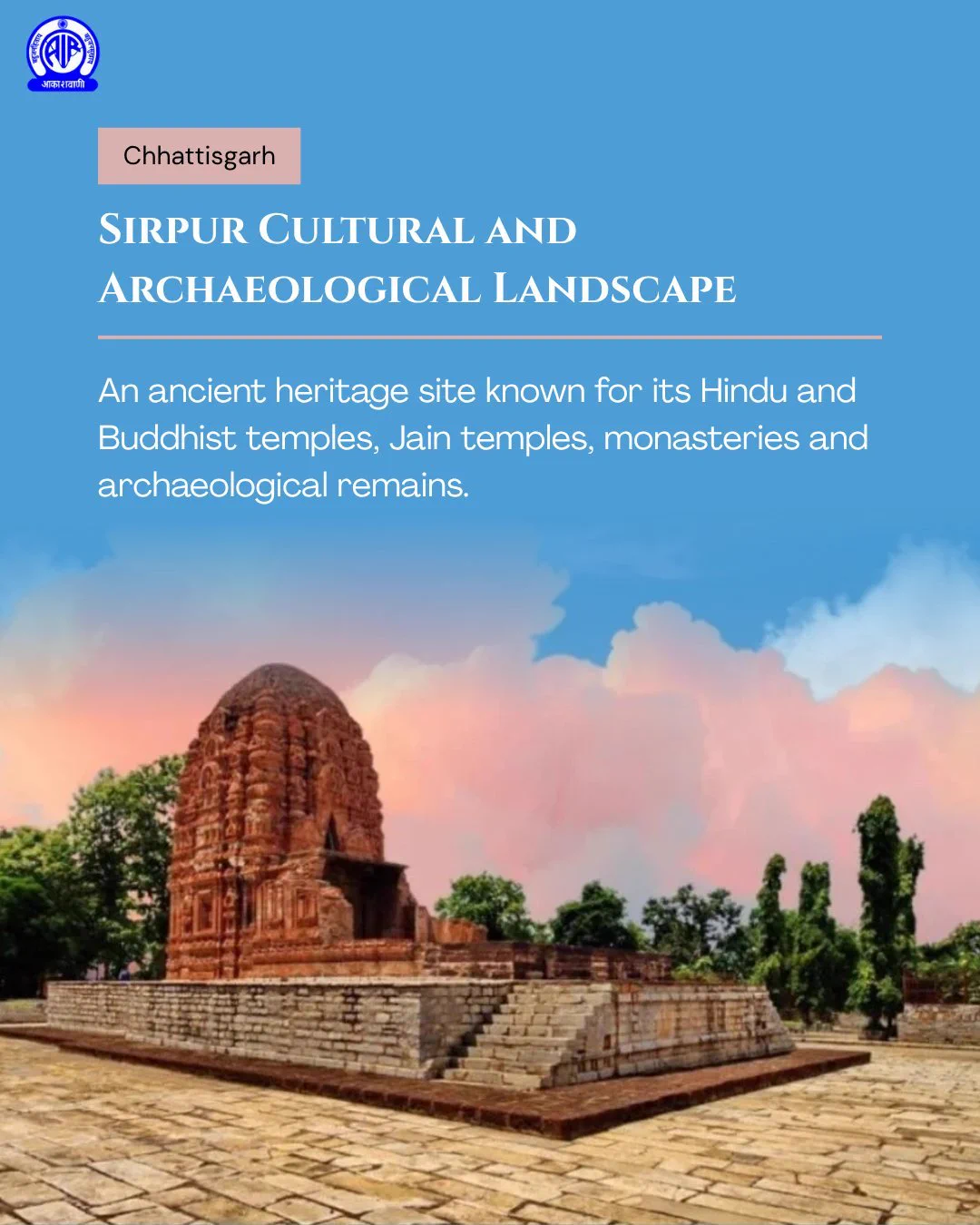
- Location: Sirpur Village is located in the Mahasamund district of Chhattisgarh.
- It is situated on the eastern banks of theMahanadi River.
- Architectural Features:
- It was an important settlement between the 5th and 12th centuries.
- Its remains include Hindu temples, Buddhist monasteries and Jain structures, making it an important site for understanding the region’s religious and cultural history.
- The site has 22 Shiva temples, five Vaishnava temples, 10 Buddhist viharas and three Jain viharas.
- The Lakshmana Temple (dedicated to Lord Vishnu) is one of the finest brick temples in India, built around the 7th century.
- Apart from being a multi-religious urban centre, it was once a flourishing capital of Dakshina Kosala under the Panduvanshi and later, the Somavamshi kings.
- It has remains of palace complexes, market structures, residential quarters, brick and stone temples along with Viharas, stupas, meditation cells and water management systems.
- Its distinctive feature is the combination of a riverine trade centre, a multi-faith religious landscape and an extensive archaeological urban complex within a single site.
- The town naturally forms four thematic clusters — Buddhist monastic, Hindu temple, civic–administrative and Riverine Sacred Landscape.
- Present-Day Landscape: The area includes around 300 houses and nearly 1,500 people.
- The buffer zone is home to tribal communities such as the Gond and Baiga.
- Barnawapara Wildlife Sanctuary, located within the property’s buffer zone, further highlights the coexistence of nature, historical heritage and traditional communities.



