


NEWS
- 25 March | The Honest UPSC Talk Nobody Tells You Click Here to see Abhijit Asokan AIR 234 talk →
- 10 March | SFG Folks! This dude got Rank 7 in CSE 2025 with SFG! →
- 10 March | SFG Folks! She failed prelims 3 times. Then cleared the exam in one go! Watch Now! →
News: India’s Deepavali festival has been added to UNESCO’s Representative List of the Intangible Cultural Heritage of Humanity.
About UNESCO’s inscription of Deepavali on the Intangible Cultural Heritage list
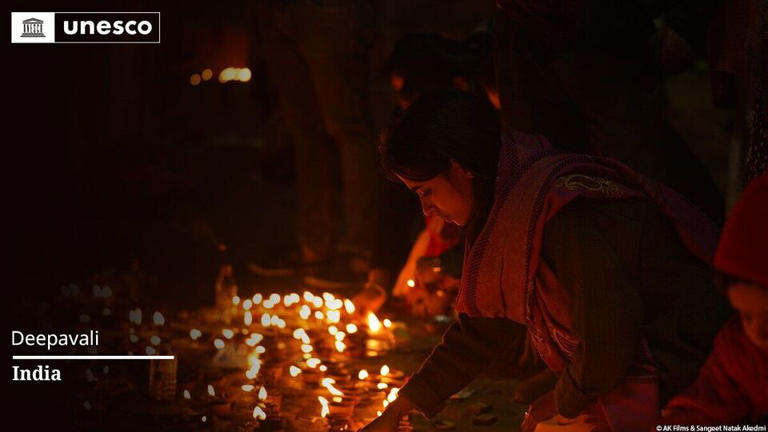
- UNESCO has inscribed India’s nomination for Deepavali (Diwali), the “festival of light,” onto the Representative List of the Intangible Cultural Heritage of Humanity for 2025.
- This decision was taken during a key meeting of UNESCO held at the Red Fort in New Delhi.
- The inscription follows earlier recognitions such as Garba from Gujarat and Durga Puja from West Bengal.
- Implications of the Inscription for Deepavali:
- The inscription enhances the international recognition and status of Deepavali as a living cultural expression.
- UNESCO’s Intergovernmental Committee provides guidance on best practices, recommends measures for safeguarding the tradition, and mobilises resources through the Intangible Cultural Heritage Fund.
- The recognition is expected to strengthen cultural exchanges, boost tourism, and enhance the festival’s global visibility.
- The listing also supports sustainable livelihoods, especially for artisans who help keep Diwali’s traditions alive.
- India’s pitch for Diwali’s inclusion also aims to reach the Indian diaspora, reinforcing cultural ties across borders.
About Intangible Cultural Heritage
- Intangible Cultural Heritage refers to living traditions, skills, and expressions passed down through generations.
- Unlike tangible heritage such as monuments or archaeological sites, intangible heritage comprises oral traditions, performing arts, social practices, rituals and festivals, nature-related knowledge, and traditional craftsmanship.
- These elements are valued because they strengthen cultural identity, diversity, and community continuity.
- India’s Current Presence on the List
- UNESCO’s Intangible Cultural Heritage List currently contains around 700 elements from 140 countries.
- With the addition of Deepavali, India now has 16 elements included on the list.
- India’s existing inscriptions include Kumbh Mela, Durga Puja of Kolkata, Garba of Gujarat, yoga, the Vedic chanting tradition, and Ramleela.
- Criteria for an Element to Be Listed
- UNESCO requires intangible cultural heritage elements to be inclusive, representative, and community-based in order to qualify for listing.
- The organisation emphasizes that such practices should express shared identity and collective memory.
- A noted example is UNESCO’s earlier inclusion of the “artisanal know-how and culture of baguette bread” as an element representing France’s daily ritual and cultural conviviality.
- UNESCO underscores the urgency of safeguarding diverse social histories in a globalised and conflict-ridden world, especially those at high risk.
Note: To know more about Intangible heritage list, click here





