


Model Youth Gram Sabha (MYGS)

sfg-2026
ForumIAS LATEST
  1. 04 June | MGP Strategy Series | GS Paper 4 (Ethics) with AIR 7 A.R. Rajah Mohaideen Click Here to register for the session →
  2. 04 June | GS Advance Program begins from 4th June 2026 | First 2 classes open to all Click Here to register for the event →
  3. 05 June | MGP Strategy Series | GS Paper 3 Strategy Session with AIR 406 Mannat Luthra Click Here to register for the session
  4. 06 June | Open Orientation on Essay Guidance Program (EGP 2026) Click Here to register →
  5. 07 June | Open Orientation for Current Affairs for Mains 2026 Click Here to register →
  6. 07 June | Sociology Optional Strategy Session with AIR 10 Ujjwal Priyank Click Here to register →

News: For the first time, India is preparing to bring the concept of Gram Sabhas into classrooms through the Model Youth Gram Sabha (MYGS) initiative.

About Model Youth Gram Sabha (MYGS) Programme
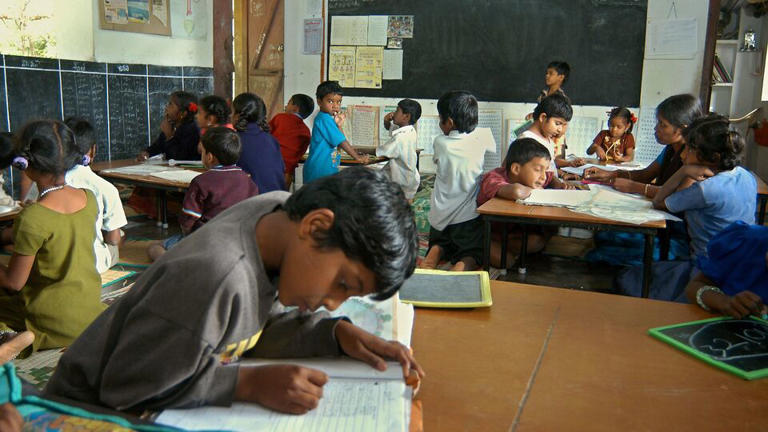
Model Youth Gram Sabha
Source: Livemint
About 
  • It is a school-based programme to bring the democratic process of Gram Sabhas into classrooms across India.
  • It is inspired by the concept of the Model United Nations (MUN).
  • It is the first structured attempt to directly involve children in governance processes at the grassroots level.
Launched by 
  • It has been launched by the Ministry of Panchayati Raj.
  • The curriculum and modules for the sessions are being designed by the Ministry of Panchayati Raj, in collaboration with the Ministries of Education and Tribal Affairs.
AimTo generate awareness about grassroots democracy in school children at an early age
Objective 
  • It seeks to:
    • Help students understand the role and significance of Gram Sabhas in local governance.
    • Shape a generation that perceives local government as a meaningful space for public service.
    • Nurture leadership skills in young children, providing them with a strong ethical foundation that goes beyond classroom learning.
    • Revive student and youth interest in Gram Sabhas, which in practice often witness low levels of participation.
Implementation 
  • The programme will begin in 1,100–1,200 schools, including Jawahar Navodaya Vidyalayas, Eklavya Model Residential Schools in tribal regions, and government schools in rural areas of Maharashtra and Karnataka.
  • The launch will be phased:
    • Phase 1: Around 620 Jawahar Navodaya Vidyalayas and 200 Eklavya Model Residential Schools.
    • Phase 2: More government schools, particularly in Maharashtra and Karnataka, will be included.

Features of the programme

  • In identified schools, students from classes 9–12 will take on roles such as sarpanch, ward members, village secretary, Anganwadi worker, auxiliary nurse midwife (ANM), and junior engineers.
  • They will conduct mock Gram Sabha sessions, where they will:
    • Debate and discuss local governance issues.
    • Prepare budgets and development plans for villages.
    • Pass mock resolutions on matters affecting local life.
  • The exercise will simulate the functioning of real Gram Sabhas, which are local assemblies of all adults in a rural area.
  • Training will be imparted to teachers through National Level Master Trainers (NLMTs) to conduct simulations effectively.
  • After mock Gram Sabha sessions, there will be regional and national-level competitions for JNVs and EMRSs.
  • Winning schools will receive prize money. All participating schools will receive certificates, and each school will get ₹20,000 in support from the Ministry to organize the sessions.

Print Friendly and PDF
Blog
Academy
Community